

When Does Furniture Become Art? Rob Hare Refuses to Choose
When Does Furniture Become Art? Rob Hare Refuses to Choose
At Marvel's 7 Lispenard in Tribeca, the Hudson Valley sculptor and furniture maker challenges the boundaries between art, craft, and utility, transforming wood and metal into objects of unexpected beauty.
Rob Hare has never been particularly interested in the distinctions separating art from craft, sculpture from furniture, or the practical from the poetic. For more than five decades, the Hudson Valley–based artist and furniture maker has moved between these worlds, producing objects that are simultaneously functional, sculptural, and deeply personal. A chair is a place to sit, but it can also explore structural forces. A box can hold something precious while becoming a miniature landscape. And a table, assembled from wood and forged steel, can reveal as much about its materials as the person who made it.
Rob Hare: Beyond Function, on view through January 18, 2027, at 7 Lispenard, Marvel’s storefront laboratory for design, culture, and community engagement, brings together furniture, sculpture, boxes, and objects spanning nearly five decades. Conceived as a retrospective, the exhibition traces the evolution of a maker who has consistently challenged conventional categories.
It is an appropriate exhibition for an architecture firm. Hare’s work shares with architecture a preoccupation with structure, material behavior, proportion, and the relationship between form and function. Connections are revealed rather than concealed; metal supports communicate the loads they carry; and wood retains a physical presence that resists excessive manipulation. Yet for Hare, the ultimate objective is emotional engagement.
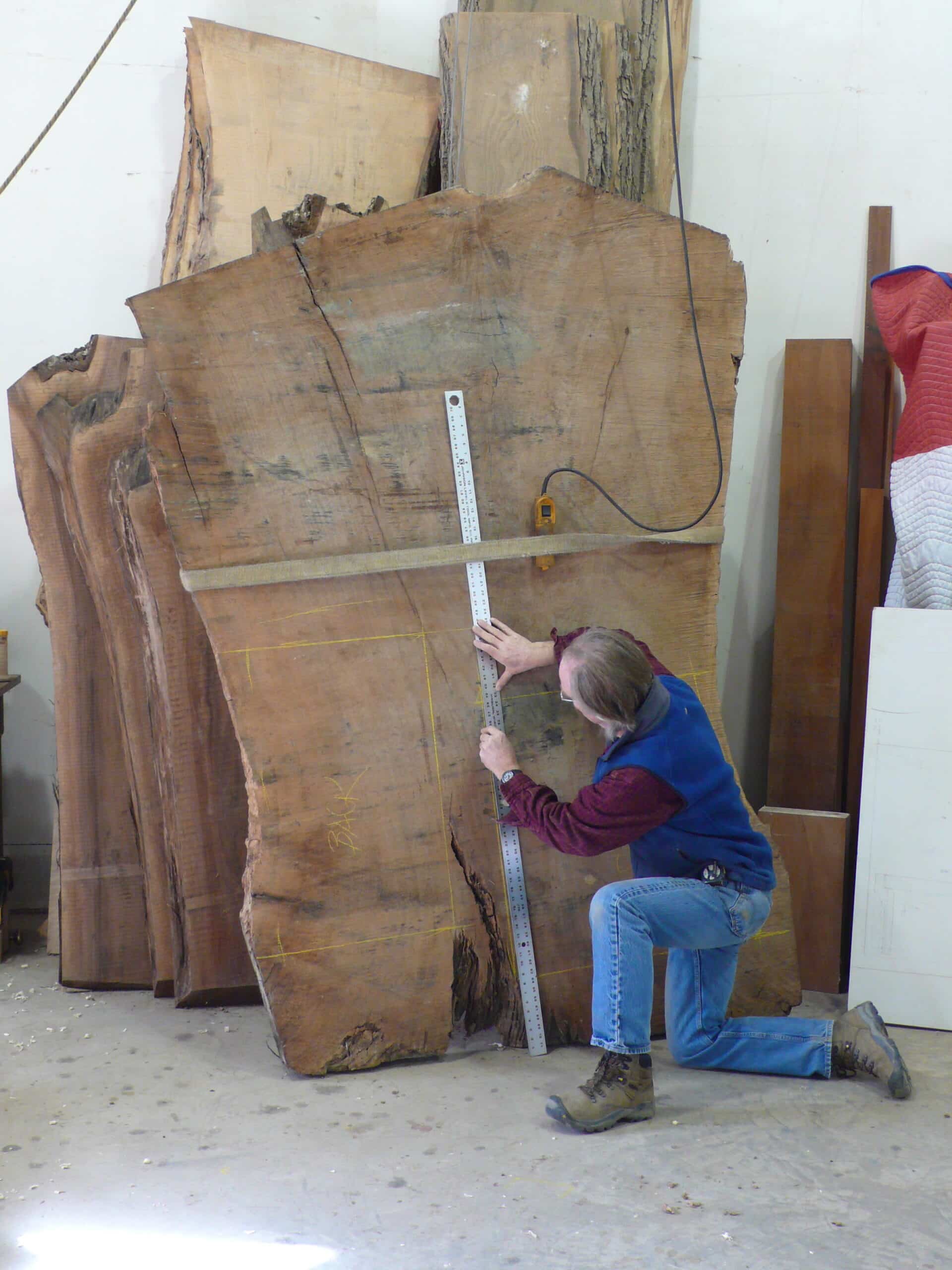
Rob Hare in his studio in Kingston, NY
An Education in Making
Hare grew up in northwestern Connecticut, surrounded by antique furniture and objects that would later influence his understanding of craft. At a Waldorf boarding school in New Hampshire during the 1960s, students worked with their hands. The school had its own sawmill, and students cut trees, milled lumber, and constructed buildings. Hare also rebuilt automobiles and experimented with sculpture.
“We actually cut our own trees, milled them, and built,” he recalls. It was something of a paradise for a mechanically inclined young man.
Hare never formally studied furniture making or woodworking. Instead, he pursued sculpture, attending the Silvermine School of Art in Connecticut, studying at the Maryland Institute, and earning a BA from Goddard College in 1970. He subsequently received an MFA in sculpture from the University of Cincinnati in 1974 and taught at Wooster School in Danbury, Connecticut.
During graduate school, Hare discovered that the university offered welding instruction. He enrolled for three hours a night, three nights a week, for an entire year. His first job after graduation was welding structural steel.
That combination of sculptural ambition and industrial experience became fundamental to his work. Having combined wood and metal since high school, Hare developed an approach that depended upon the contrasting properties of both.
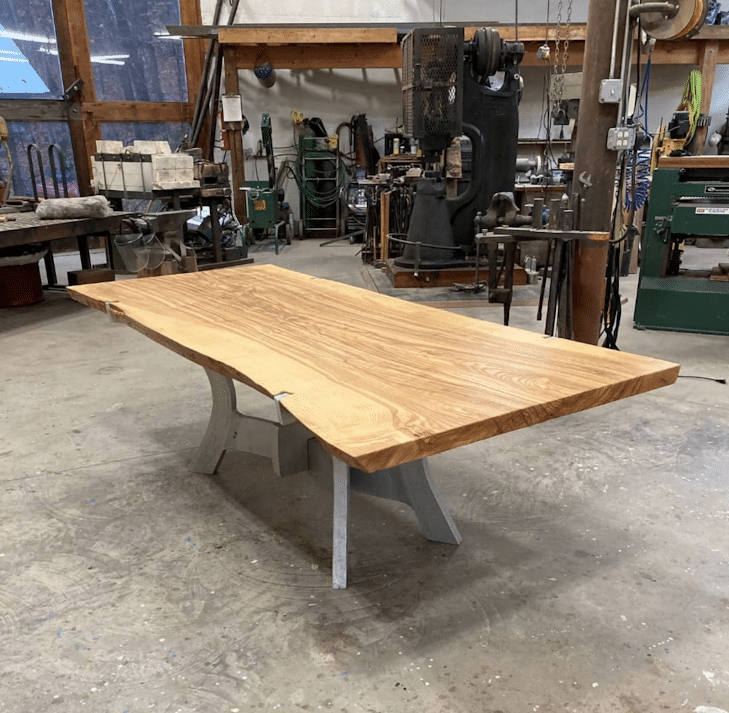
Ash Dining Table, 2018
Single Plank Ash, hand-forged aluminum.
42″W x 94″L
The Nature of Materials
Wood and steel are not obvious partners. One is organic, variable, and responsive to changes in humidity and temperature. The other, once shaped, is comparatively stable and predictable. Wood can be worked quietly with hand tools; steel demands heat, force, and physical exertion.
“They have different natures. There’s no getting around that,” Hare explained in an earlier profile in Home Furniture. “Metal is much more malleable than wood and problems, if they occur, happen when you are working on it. Wood’s problems occur much later.”
Hare embraces these differences. Metal is heated, bent, hammered, and sometimes painted, its structural role deliberately emphasized. Rather than concealing the connections between materials, he makes them central to the composition.
There is an intriguing reversal here. Metal, ostensibly the harder and more industrial material, often carries the expressive traces of handwork, while wood can appear almost machined in its precision.
Like a building whose structural system gives form to its spaces, Hare’s furniture derives much of its character from the forces it must accommodate. Construction itself becomes an aesthetic proposition.
Objects That Challenge Expectations
The exhibition makes these ideas tangible through furniture that reconciles structural ingenuity with material experimentation. Among the most striking works is Meals on Wheels (2023), a table combining white oak with repurposed railroad cart wheels aged outdoors for three years. The result is an unexpected marriage of domestic furniture and industrial salvage, with the wheels retaining their identity rather than disappearing into a conventional base.
The Ash Dining Table (2018) achieves its effect through restraint: a single 94-inch plank of ash paired with hand-forged aluminum. In the Dance Dining Table (2010), forged aluminum supports a three-quarter-inch glass top, allowing the sculptural base to become the visual protagonist. The Twist Coffee Table (2008) similarly exploits the expressive possibilities of steel beneath glass, while 3 Przyjaciółki (2018), made from book-matched Claro walnut and hand-forged aluminum, establishes a dialogue between the natural figure of wood and the deliberate gestures of the maker.
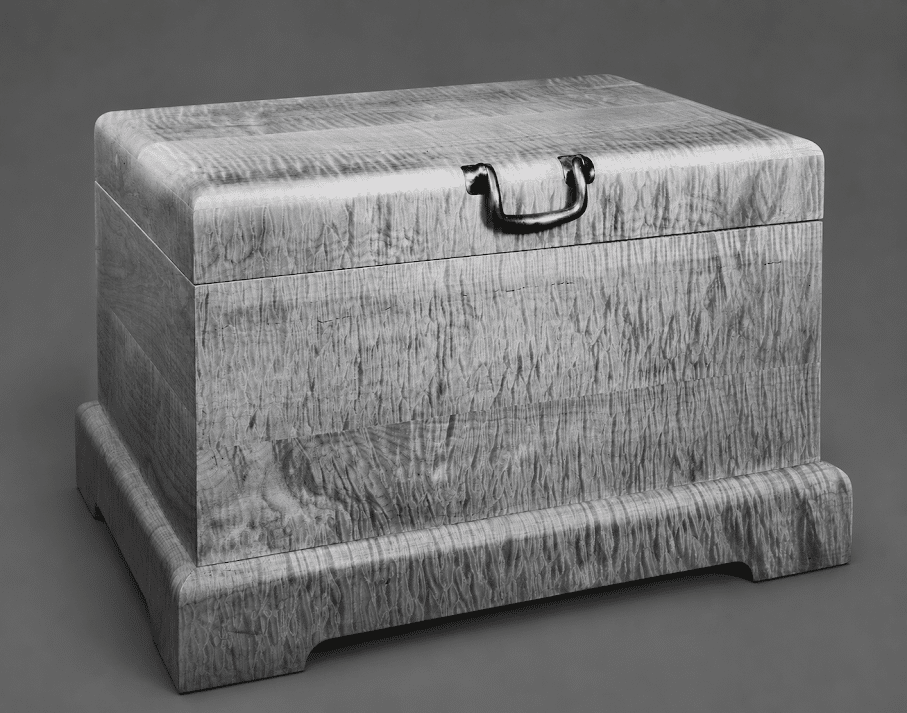
Hero Blanket Chest
Blanket Chest, 1979
Curly Maple, cast bronze hardware & interior.
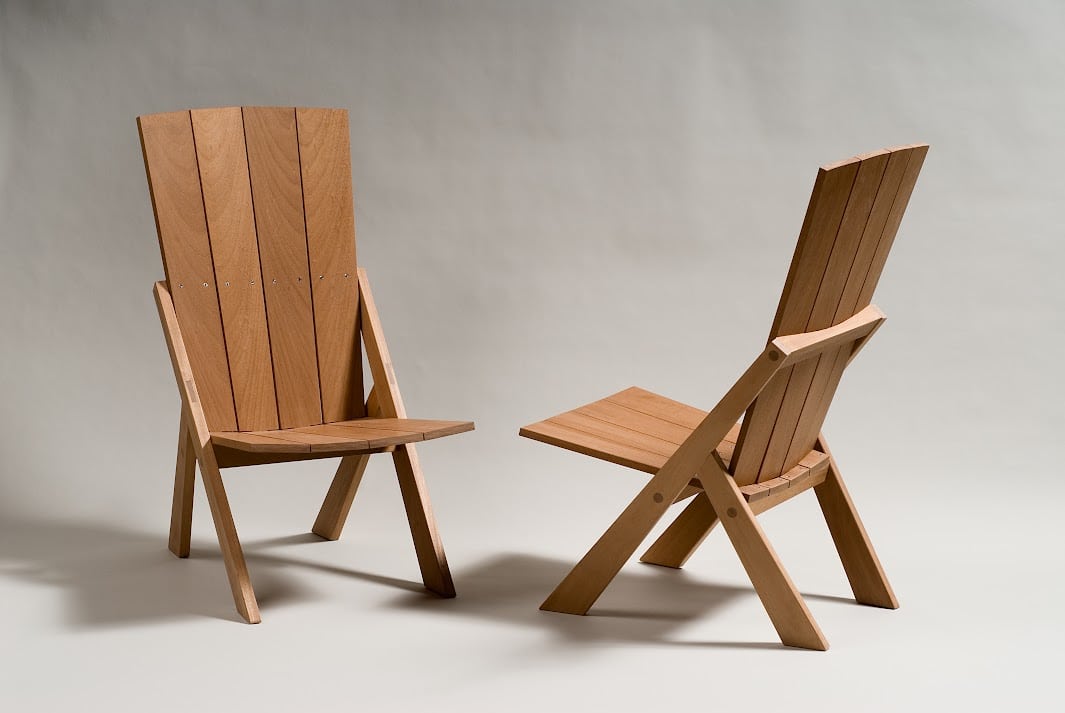
Hare’s Arm Chair (2007) combines coopered Claro walnut, hand-forged steel, and leather cushions. His interpretations of the Adirondack chair, represented by versions in white oak from 1982, clear redwood from 2002, and Honduran mahogany from 2020, demonstrate how a familiar American furniture type can be reconsidered over decades through changes in material, proportion, and use.
Equally revealing are the early sculptural boxes. The Maillol Box (1977), made from walnut and apple wood with cast-bronze hardware, and the Landscape Box (1979), combining walnut and fabricated steel, explore the emotional and tactile possibilities of objects that invite opening and discovery. The New Jersey Uplift Box (1981), constructed from walnut, steel, and brass, and the Orchard Box (1981), made from spalted maple and steel, further demonstrate his fascination with natural materials and constructed form.
Seen alongside the furniture, these early works suggest that Hare’s development was not a departure from sculpture toward functional design, but an expansion of sculpture into everyday life.
Between Tradition and Experiment
Hare’s interests extend across the history of furniture and craft. He recalls becoming fascinated by Shaker furniture, particularly the clarity of its chairs. An antiques dealer once offered to exchange an entire set of Shaker chairs for a single bamboo Windsor chair Hare had inherited from his grandmother.
Hare declined. He still owns the chair.
The story suggests that an object’s significance is not necessarily determined by market value or stylistic pedigree. Personal history matters just as much.
More revealing is Hare’s admiration for sculptor Martin Puryear, a close friend whose work shares his sensitivity to material, form, and the expressive possibilities of seemingly simple shapes.
Most of Hare’s furniture is commissioned by individual clients. One requested a getabako, the Japanese cabinet traditionally used for storing shoes near a home’s entrance, but wanted an interpretation drawing upon the Arts and Crafts tradition. For Hare, the commission became an opportunity to reconcile a domestic ritual with another design language.
Each commission begins with a problem to be understood and a relationship between maker, object, and user.
Craft as a Way of Thinking
Today, Hare works near Kingston, New York, in a circular he designed and built. Exactly 50 feet in diameter and two stories high, it includes overhead lifting equipment for substantial work. Alongside intimate boxes and domestic furniture, he has produced sculptures combining wood and metal, some reaching 19 feet in height and 20 feet in width.
At 7 Lispenard, his practice offers an opportunity to examine the intersection of making and design across different scales. The exhibition is not simply a celebration of handcrafted furniture or an attempt to elevate utilitarian objects by calling them art. Instead, it suggests that craft is a way of thinking, through which knowledge emerges from sustained engagement with materials, tools, and human needs.
Hare has been a sculptor, teacher, welder, builder, designer, and furniture maker, often occupying several roles simultaneously. What unites them is an insistence that ideas become meaningful through making.
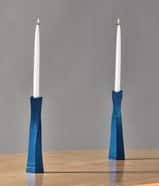
Candlesticks, 2007
Hand-forged aluminum.
In a culture fascinated by the speed and apparent effortlessness of digital production, Hare’s work reminds us that materials have their own intelligence, that resistance can be productive, and that the marks of labor need not be hidden.
A chair can support the body while stimulating the imagination. A table can express the forces holding it together. A box can open to reveal an unexpected landscape.
In Hare’s hands, the ordinary objects of everyday life become opportunities to experience the extraordinary.
Rob Hare: Beyond Function is on view at 7 Lispenard Street, Tribeca, New York, November 12, 2026 until January 18, 2027. Visits are by appointment. For information, visit robhare-furnituremaker.com.
Rob Hare has never been particularly interested in the distinctions separating art from craft, sculpture from furniture, or the practical from the poetic. For more than five decades, the Hudson Valley–based artist and furniture maker has moved between these worlds, producing objects that are simultaneously functional, sculptural, and deeply personal. A chair is a place to sit, but it can also explore structural forces. A box can hold something precious while becoming a miniature landscape. And a table, assembled from wood and forged steel, can reveal as much about its materials as the person who made it.
Rob Hare: Beyond Function, on view through January 18, 2027, at 7 Lispenard, Marvel’s storefront laboratory for design, culture, and community engagement, brings together furniture, sculpture, boxes, and objects spanning nearly five decades. Conceived as a retrospective, the exhibition traces the evolution of a maker who has consistently challenged conventional categories.
It is an appropriate exhibition for an architecture firm. Hare’s work shares with architecture a preoccupation with structure, material behavior, proportion, and the relationship between form and function. Connections are revealed rather than concealed; metal supports communicate the loads they carry; and wood retains a physical presence that resists excessive manipulation. Yet for Hare, the ultimate objective is emotional engagement.
Rob Hare in his studio in Kingston, NY
An Education in Making
Hare grew up in northwestern Connecticut, surrounded by antique furniture and objects that would later influence his understanding of craft. At a Waldorf boarding school in New Hampshire during the 1960s, students worked with their hands. The school had its own sawmill, and students cut trees, milled lumber, and constructed buildings. Hare also rebuilt automobiles and experimented with sculpture.
“We actually cut our own trees, milled them, and built,” he recalls. It was something of a paradise for a mechanically inclined young man.
Hare never formally studied furniture making or woodworking. Instead, he pursued sculpture, attending the Silvermine School of Art in Connecticut, studying at the Maryland Institute, and earning a BA from Goddard College in 1970. He subsequently received an MFA in sculpture from the University of Cincinnati in 1974 and taught at Wooster School in Danbury, Connecticut.
During graduate school, Hare discovered that the university offered welding instruction. He enrolled for three hours a night, three nights a week, for an entire year. His first job after graduation was welding structural steel.
That combination of sculptural ambition and industrial experience became fundamental to his work. Having combined wood and metal since high school, Hare developed an approach that depended upon the contrasting properties of both.
Ash Dining Table, 2018
Single Plank Ash, hand-forged aluminum.
42″W x 94″L
The Nature of Materials
Wood and steel are not obvious partners. One is organic, variable, and responsive to changes in humidity and temperature. The other, once shaped, is comparatively stable and predictable. Wood can be worked quietly with hand tools; steel demands heat, force, and physical exertion.
“They have different natures. There’s no getting around that,” Hare explained in an earlier profile in Home Furniture. “Metal is much more malleable than wood and problems, if they occur, happen when you are working on it. Wood’s problems occur much later.”
Hare embraces these differences. Metal is heated, bent, hammered, and sometimes painted, its structural role deliberately emphasized. Rather than concealing the connections between materials, he makes them central to the composition.
There is an intriguing reversal here. Metal, ostensibly the harder and more industrial material, often carries the expressive traces of handwork, while wood can appear almost machined in its precision.
Like a building whose structural system gives form to its spaces, Hare’s furniture derives much of its character from the forces it must accommodate. Construction itself becomes an aesthetic proposition.
Objects That Challenge Expectations
The exhibition makes these ideas tangible through furniture that reconciles structural ingenuity with material experimentation. Among the most striking works is Meals on Wheels (2023), a table combining white oak with repurposed railroad cart wheels aged outdoors for three years. The result is an unexpected marriage of domestic furniture and industrial salvage, with the wheels retaining their identity rather than disappearing into a conventional base.
The Ash Dining Table (2018) achieves its effect through restraint: a single 94-inch plank of ash paired with hand-forged aluminum. In the Dance Dining Table (2010), forged aluminum supports a three-quarter-inch glass top, allowing the sculptural base to become the visual protagonist. The Twist Coffee Table (2008) similarly exploits the expressive possibilities of steel beneath glass, while 3 Przyjaciółki (2018), made from book-matched Claro walnut and hand-forged aluminum, establishes a dialogue between the natural figure of wood and the deliberate gestures of the maker.
Hero Blanket Chest
Blanket Chest, 1979
Curly Maple, cast bronze hardware & interior.
Hare’s Arm Chair (2007) combines coopered Claro walnut, hand-forged steel, and leather cushions. His interpretations of the Adirondack chair, represented by versions in white oak from 1982, clear redwood from 2002, and Honduran mahogany from 2020, demonstrate how a familiar American furniture type can be reconsidered over decades through changes in material, proportion, and use.
Equally revealing are the early sculptural boxes. The Maillol Box (1977), made from walnut and apple wood with cast-bronze hardware, and the Landscape Box (1979), combining walnut and fabricated steel, explore the emotional and tactile possibilities of objects that invite opening and discovery. The New Jersey Uplift Box (1981), constructed from walnut, steel, and brass, and the Orchard Box (1981), made from spalted maple and steel, further demonstrate his fascination with natural materials and constructed form.
Seen alongside the furniture, these early works suggest that Hare’s development was not a departure from sculpture toward functional design, but an expansion of sculpture into everyday life.
Between Tradition and Experiment
Hare’s interests extend across the history of furniture and craft. He recalls becoming fascinated by Shaker furniture, particularly the clarity of its chairs. An antiques dealer once offered to exchange an entire set of Shaker chairs for a single bamboo Windsor chair Hare had inherited from his grandmother.
Hare declined. He still owns the chair.
The story suggests that an object’s significance is not necessarily determined by market value or stylistic pedigree. Personal history matters just as much.
More revealing is Hare’s admiration for sculptor Martin Puryear, a close friend whose work shares his sensitivity to material, form, and the expressive possibilities of seemingly simple shapes.
Most of Hare’s furniture is commissioned by individual clients. One requested a getabako, the Japanese cabinet traditionally used for storing shoes near a home’s entrance, but wanted an interpretation drawing upon the Arts and Crafts tradition. For Hare, the commission became an opportunity to reconcile a domestic ritual with another design language.
Each commission begins with a problem to be understood and a relationship between maker, object, and user.
Craft as a Way of Thinking
Today, Hare works near Kingston, New York, in a circular he designed and built. Exactly 50 feet in diameter and two stories high, it includes overhead lifting equipment for substantial work. Alongside intimate boxes and domestic furniture, he has produced sculptures combining wood and metal, some reaching 19 feet in height and 20 feet in width.
At 7 Lispenard, his practice offers an opportunity to examine the intersection of making and design across different scales. The exhibition is not simply a celebration of handcrafted furniture or an attempt to elevate utilitarian objects by calling them art. Instead, it suggests that craft is a way of thinking, through which knowledge emerges from sustained engagement with materials, tools, and human needs.
Hare has been a sculptor, teacher, welder, builder, designer, and furniture maker, often occupying several roles simultaneously. What unites them is an insistence that ideas become meaningful through making.
Candlesticks, 2007
Hand-forged aluminum.
In a culture fascinated by the speed and apparent effortlessness of digital production, Hare’s work reminds us that materials have their own intelligence, that resistance can be productive, and that the marks of labor need not be hidden.
A chair can support the body while stimulating the imagination. A table can express the forces holding it together. A box can open to reveal an unexpected landscape.
In Hare’s hands, the ordinary objects of everyday life become opportunities to experience the extraordinary.
Rob Hare: Beyond Function is on view at 7 Lispenard Street, Tribeca, New York, November 12, 2026 until January 18, 2027. Visits are by appointment. For information, visit robhare-furnituremaker.com.