

Maritime City Exhibit Design, South Street Seaport Museum
A display system built to carry four centuries of exchange, object by object
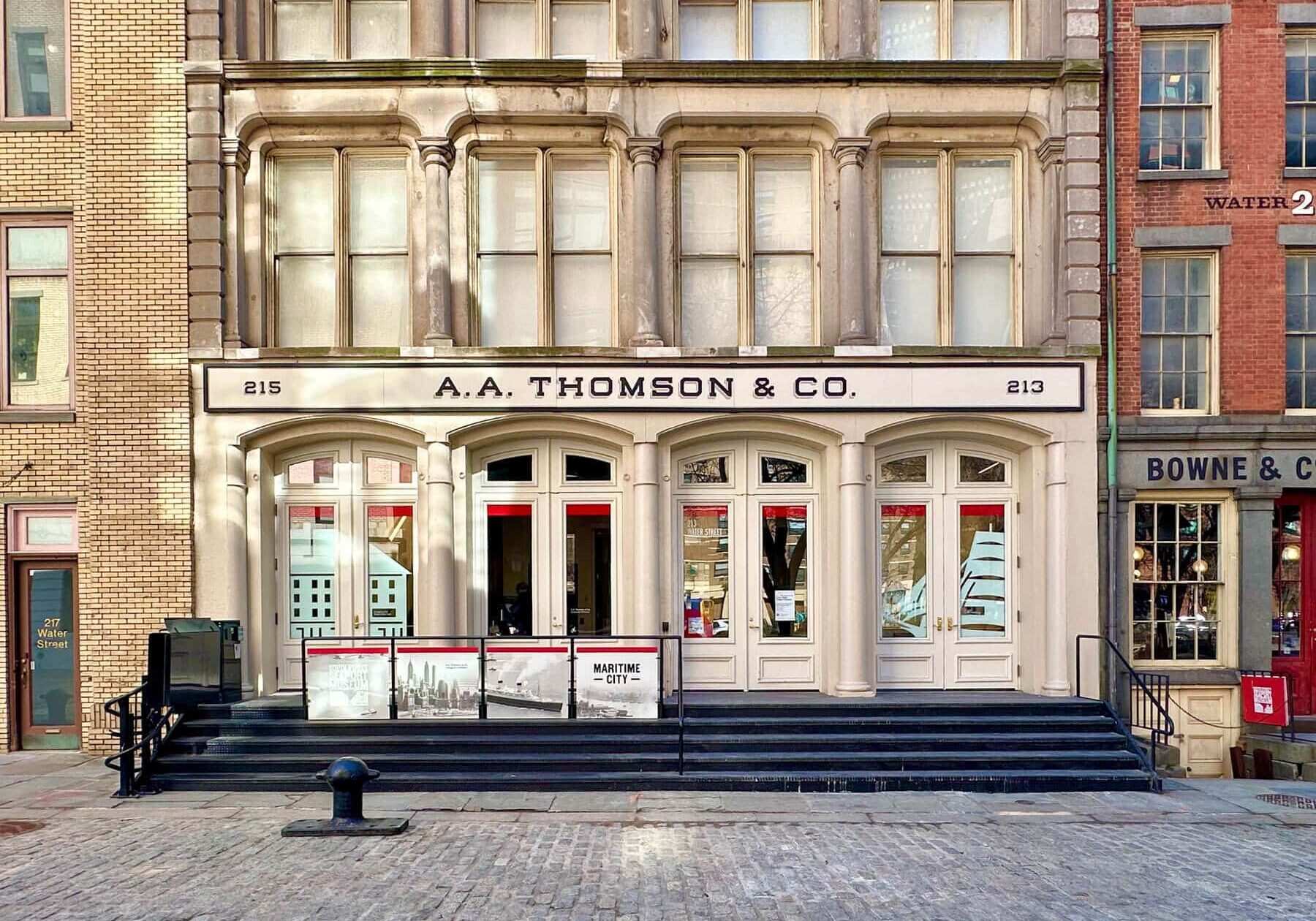
Marvel led the concept and design for Maritime City, the South Street Seaport Museum's inaugural permanent exhibition housed within the landmark 1868 A. A. Thomson & Co. Warehouse in Lower Manhattan. Spanning three floors, the exhibition presents over 540 artifacts drawn from the museum's collection of more than 80,000 objects, tracing how a port city became a global capital. Inspired by the neighborhood fabric of the South Street Seaport district, the building's architectural heritage, and historic shipping containers, a system of modular oak vitrines acts as framing devices that both house and unpack objects ranging from intimate trade fragments to a 22-foot model of the RMS Queen Mary. Concealed behind the modular boxes, metal rail cleats anchored to the masonry walls give the museum the flexibility to evolve the exhibition over time, ensuring the design serves the institution as durably as the warehouse itself has. The result is an exhibition environment that feels deeply connected to the Seaport district, celebrating the city's maritime legacy through the objects, stories, and communities that shaped it.
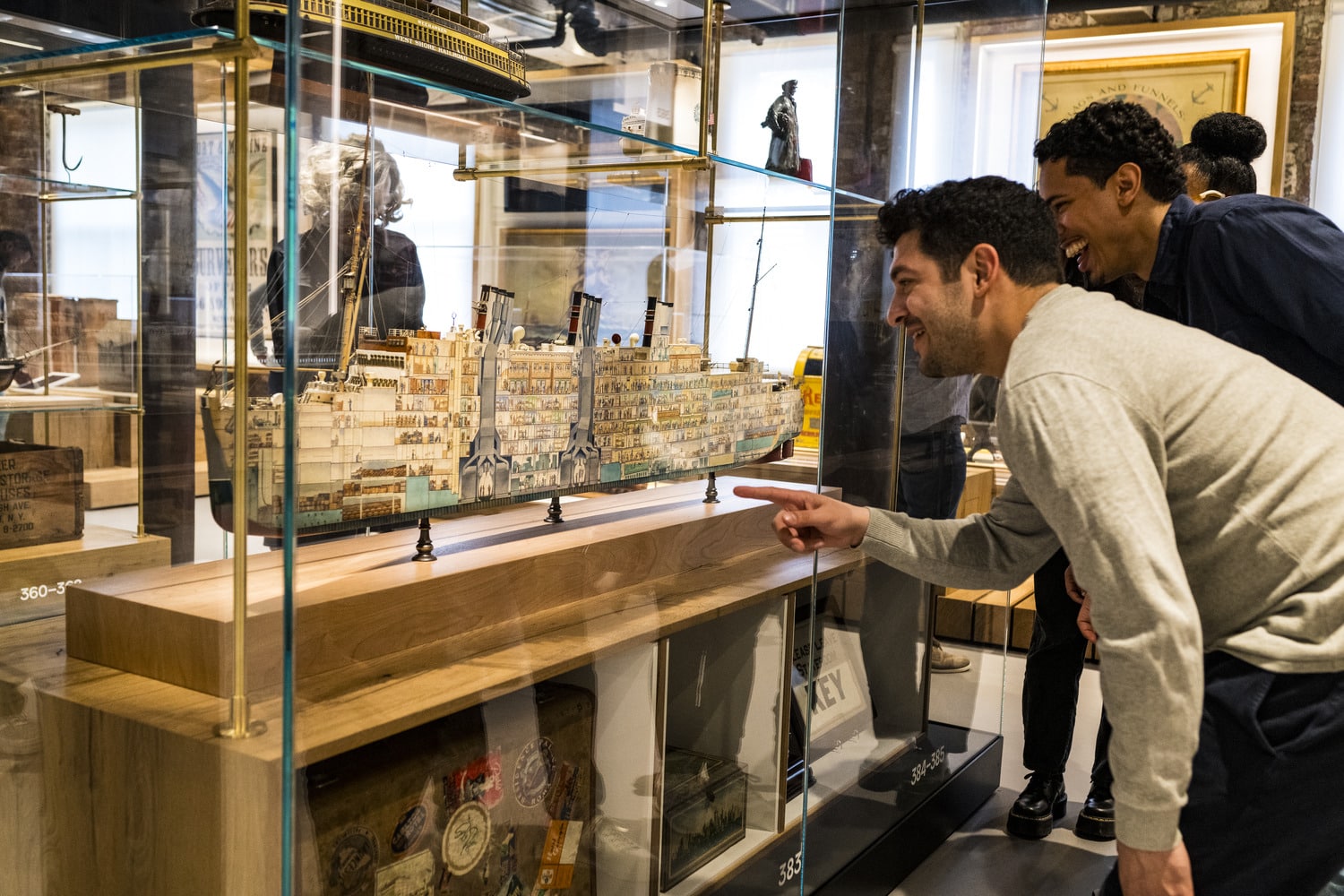
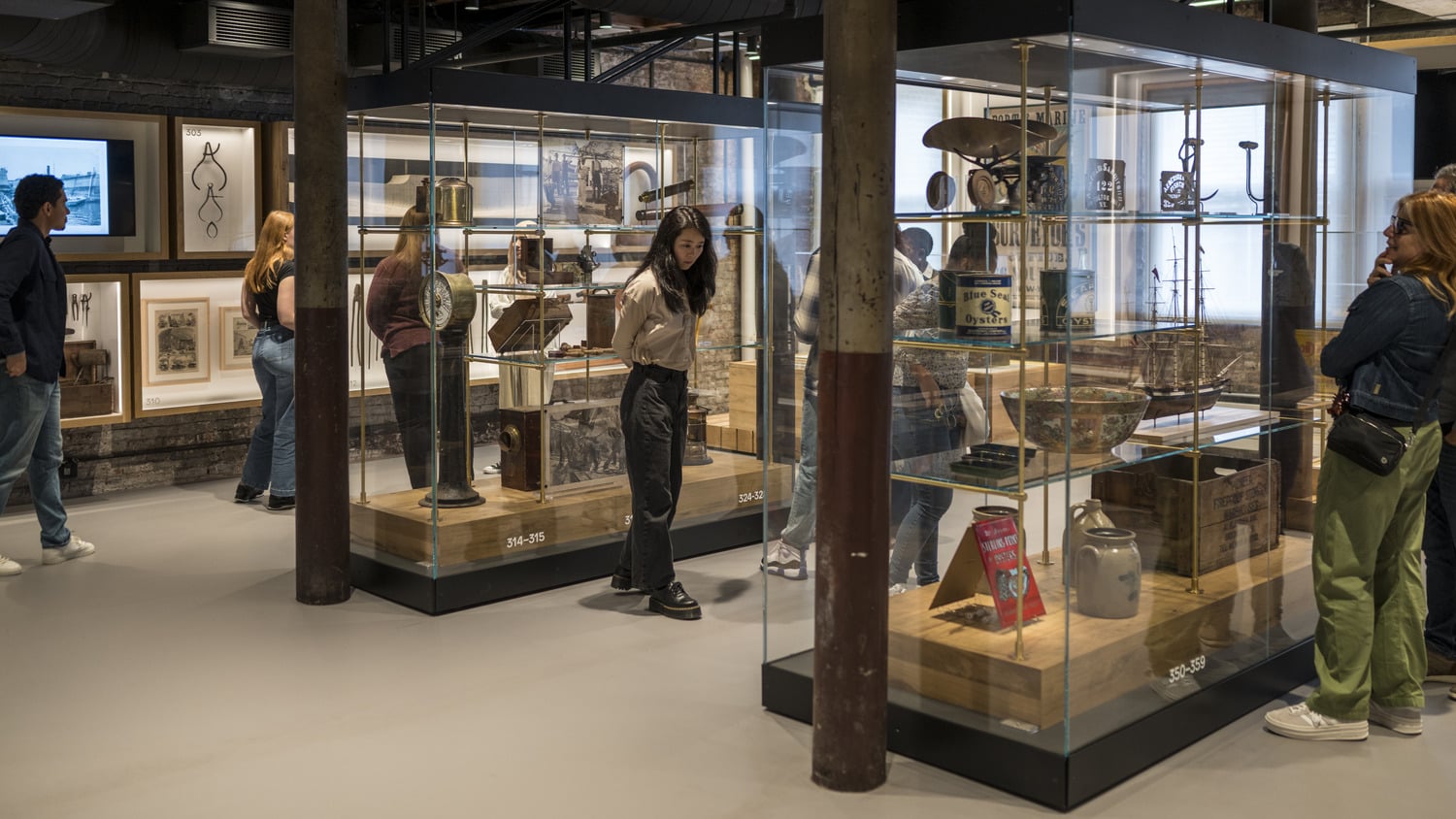
Placement of objects within a system of modular oak boxes, inside cabinets, on top of pallets, and within immersive videos provides multiple points of view and invites fresh perspectives.
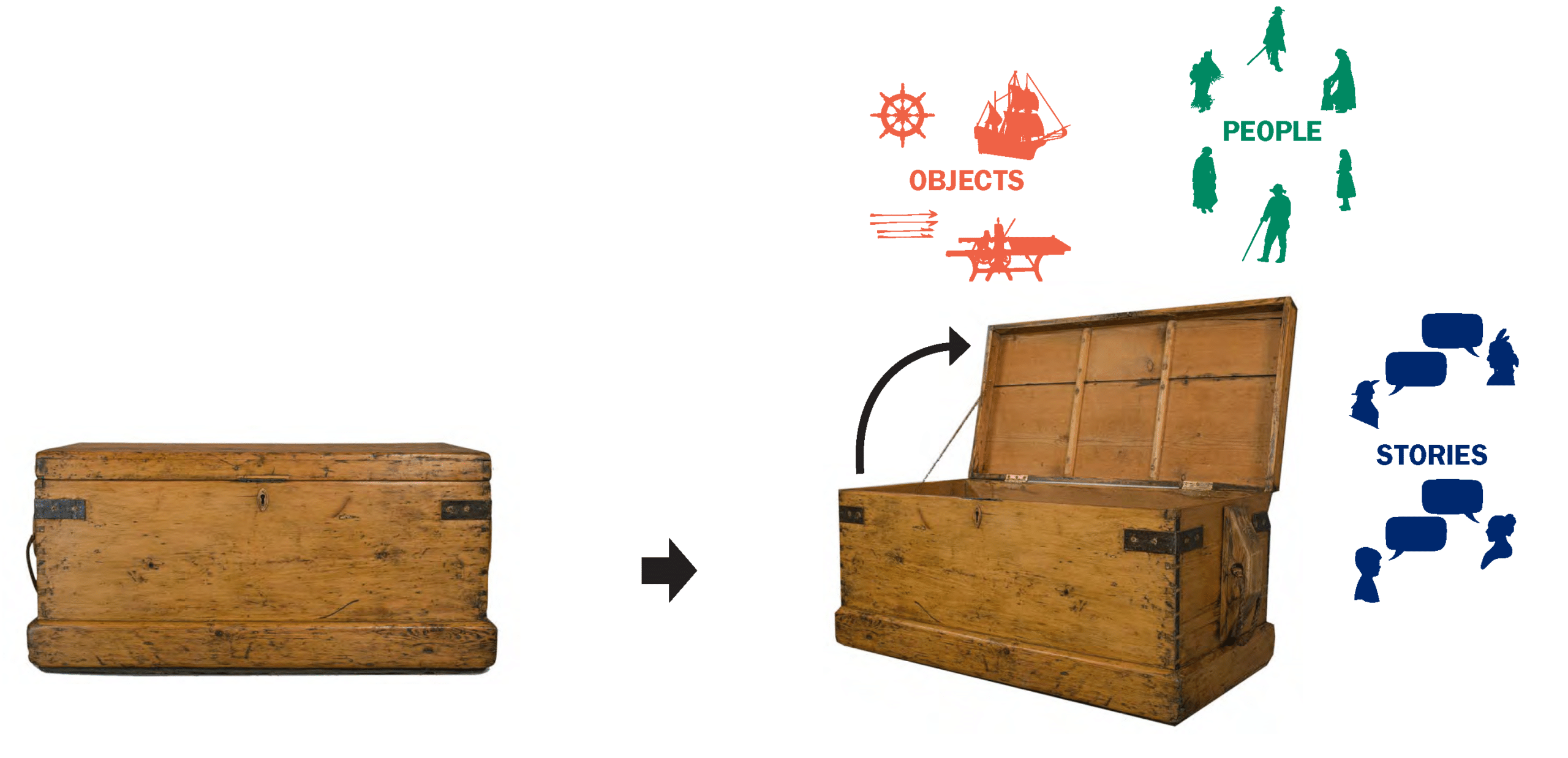
“The design encourages visitors to connect to the textures, stories, and functions of artifacts to their respective containers—shipping crates, trunks, sea-going vessels, and warehouses—and affirms our fascination with unpacking—everything from internet merch to our ever-evolving relationship to history.”
Dennis Vermeulen, Partner at Marvel
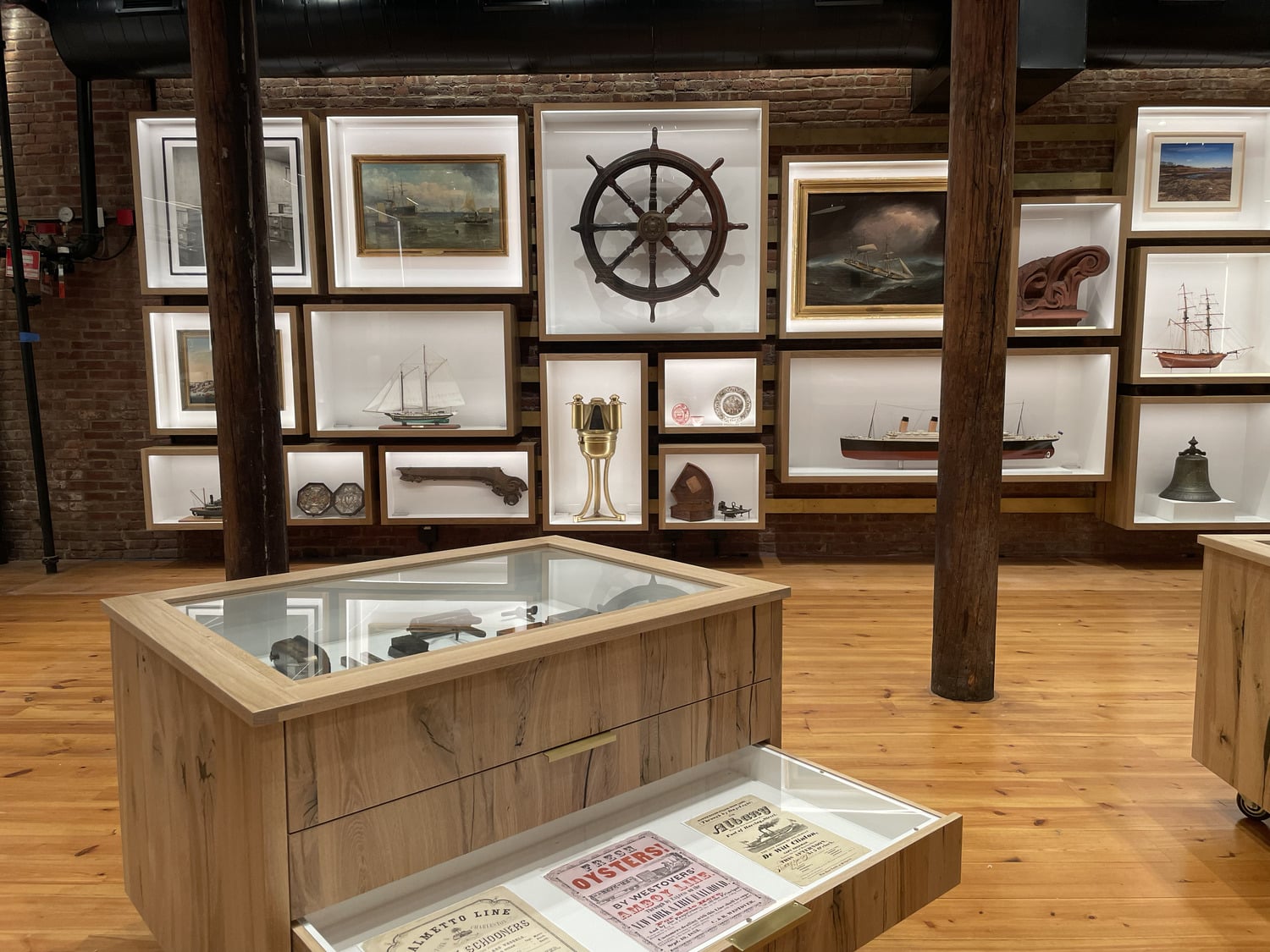
Flat file drawers are utilized for viewers to uncover historical arts and crafts techniques, including technical drawings and ship plans, letterpress broadsides, lithographs, and wood engravings and discover the tools used to create these pieces.
This re-emergence from a decade in storage provides an opportunity to reposition the Museum’s collection alongside the history of industry, craft, and the movement of goods and people.
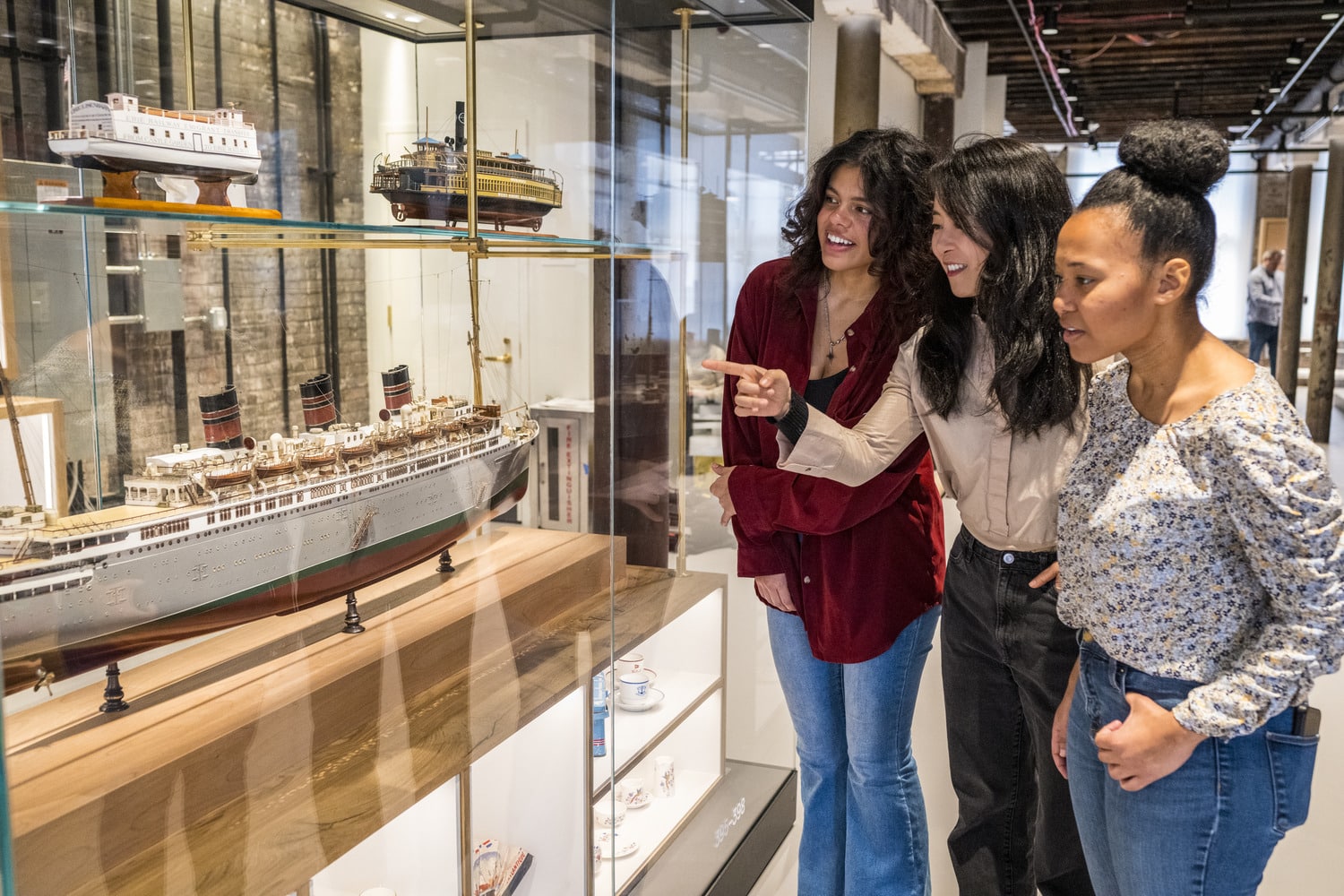
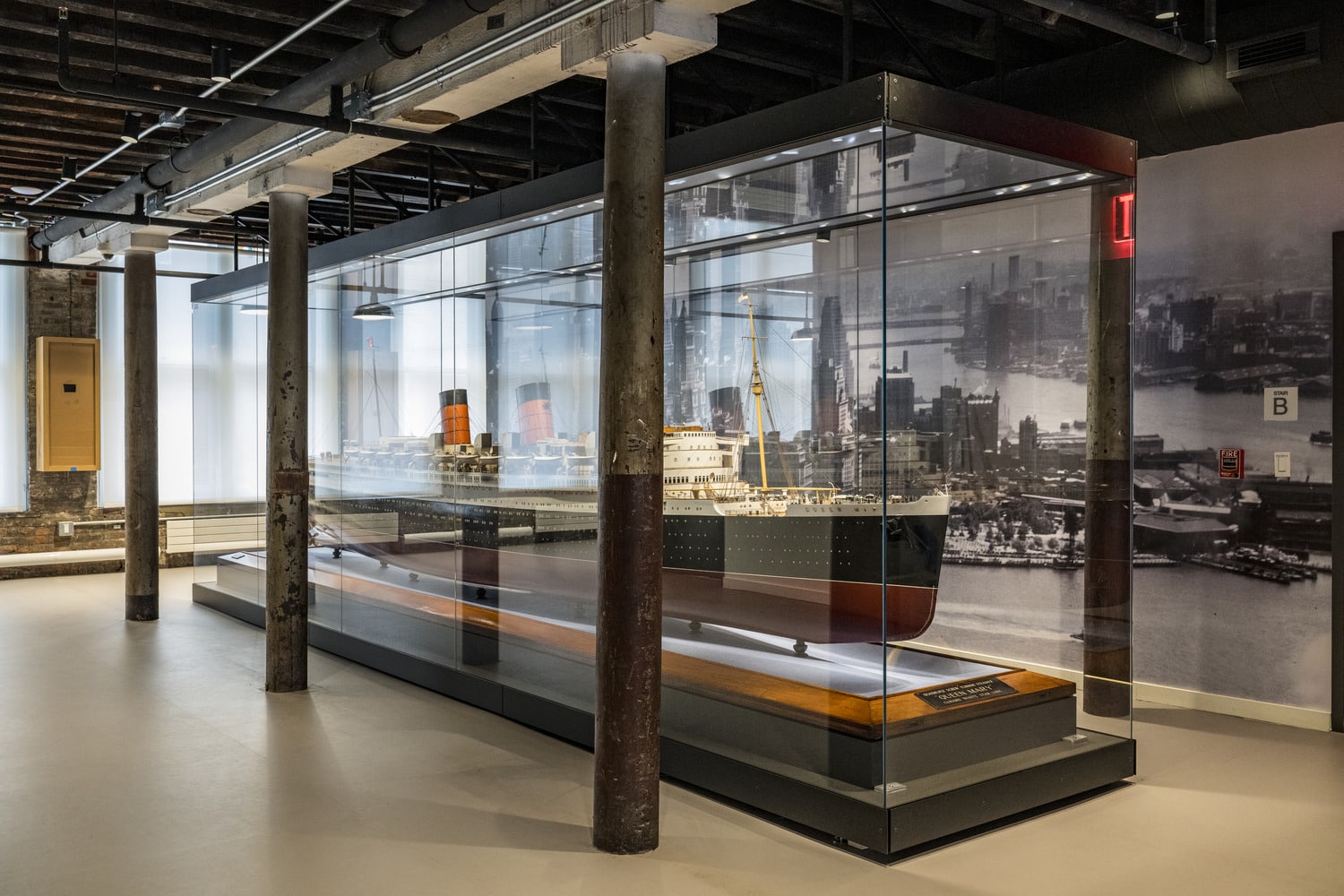
The 90-year-old, 22-foot long builder model of RMS Queen Mary has been restored and installed.
"In collaboration with the Museum, our goal was to use design as a storytelling tool to craft the visitor experience across all three exhibition floors of this building. We wanted to create an exhibition that welcomes visitors from all backgrounds near and far and is accessible to all ages and mobility levels."
Justine Ala, Architectural Designer at Marvel
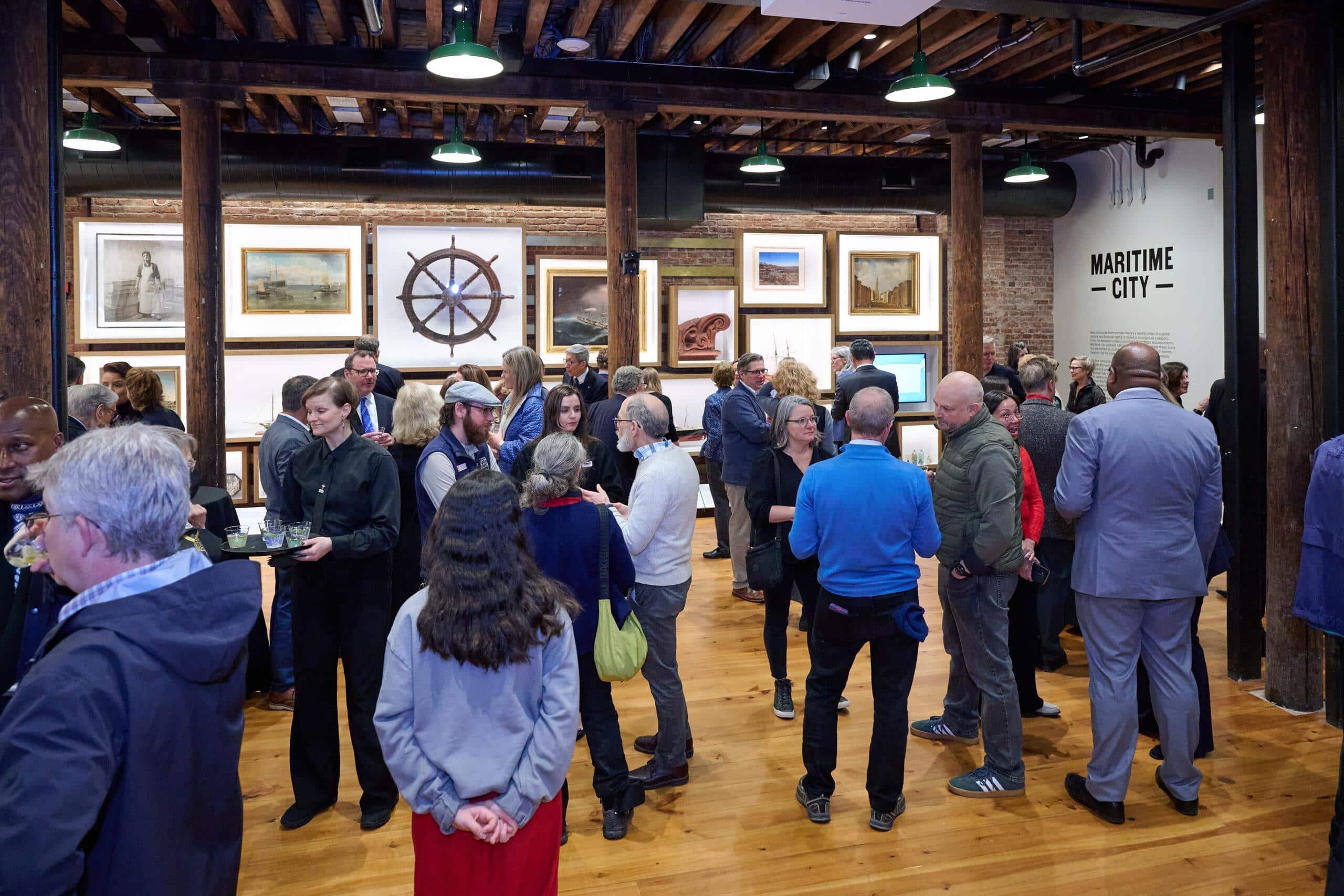
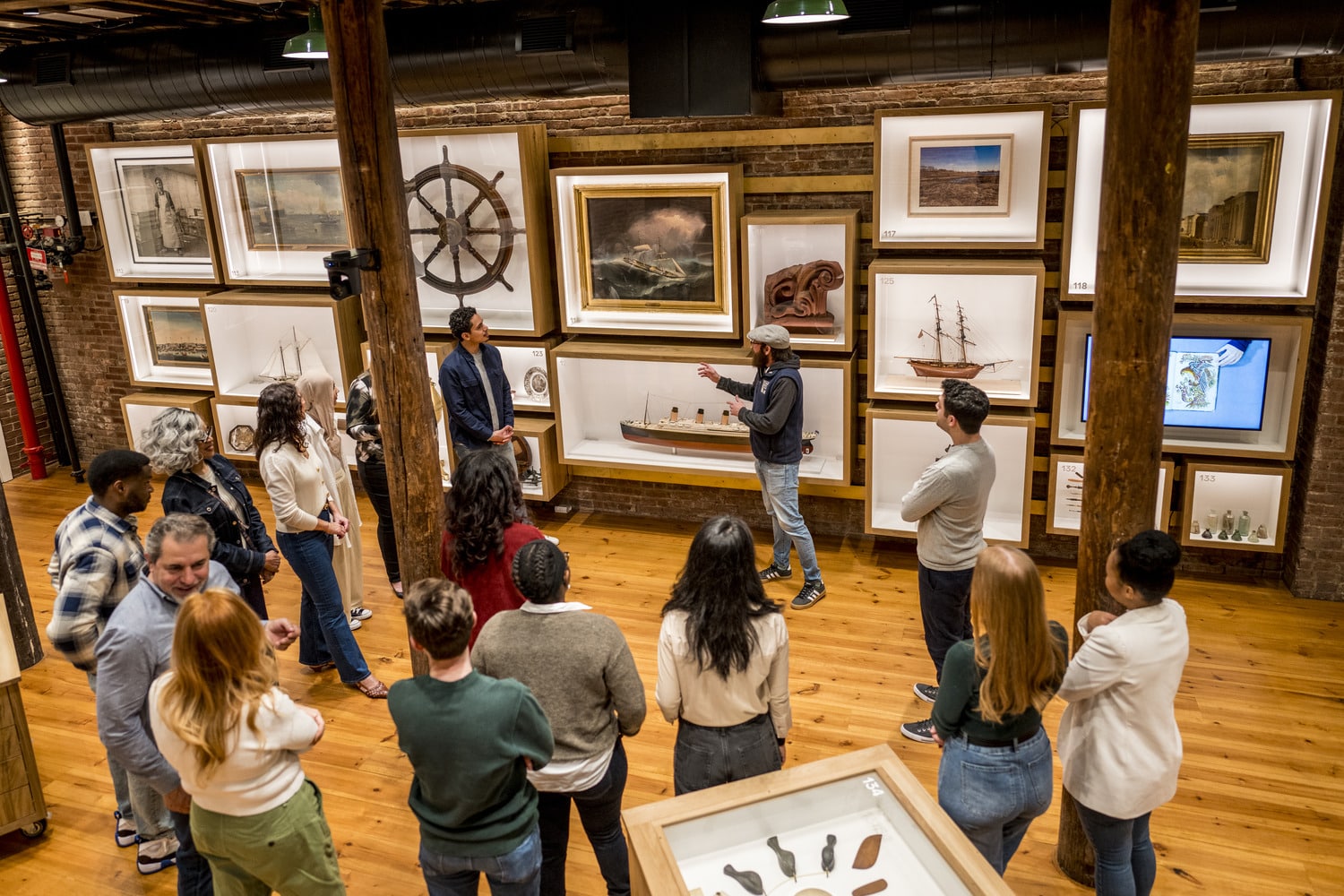
The ground floor has cases fixed to the walls and moveable furniture, which is ideal for quick spatial reconfiguration and allows for people to fill the space during special events.
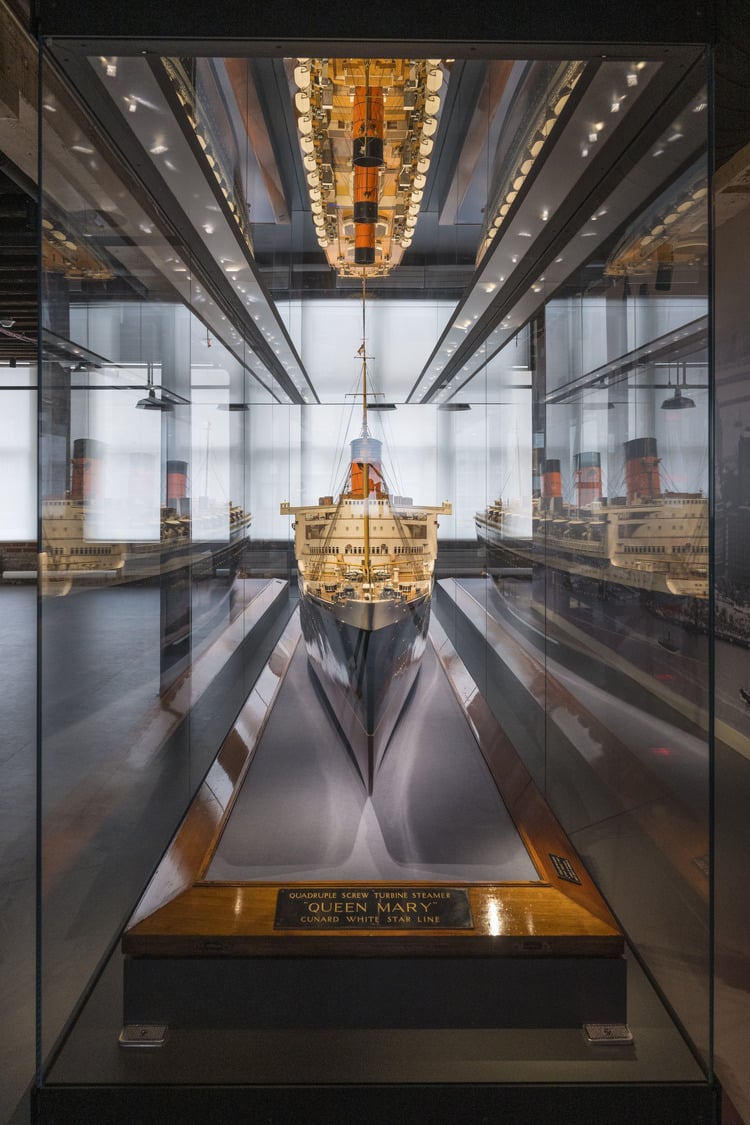
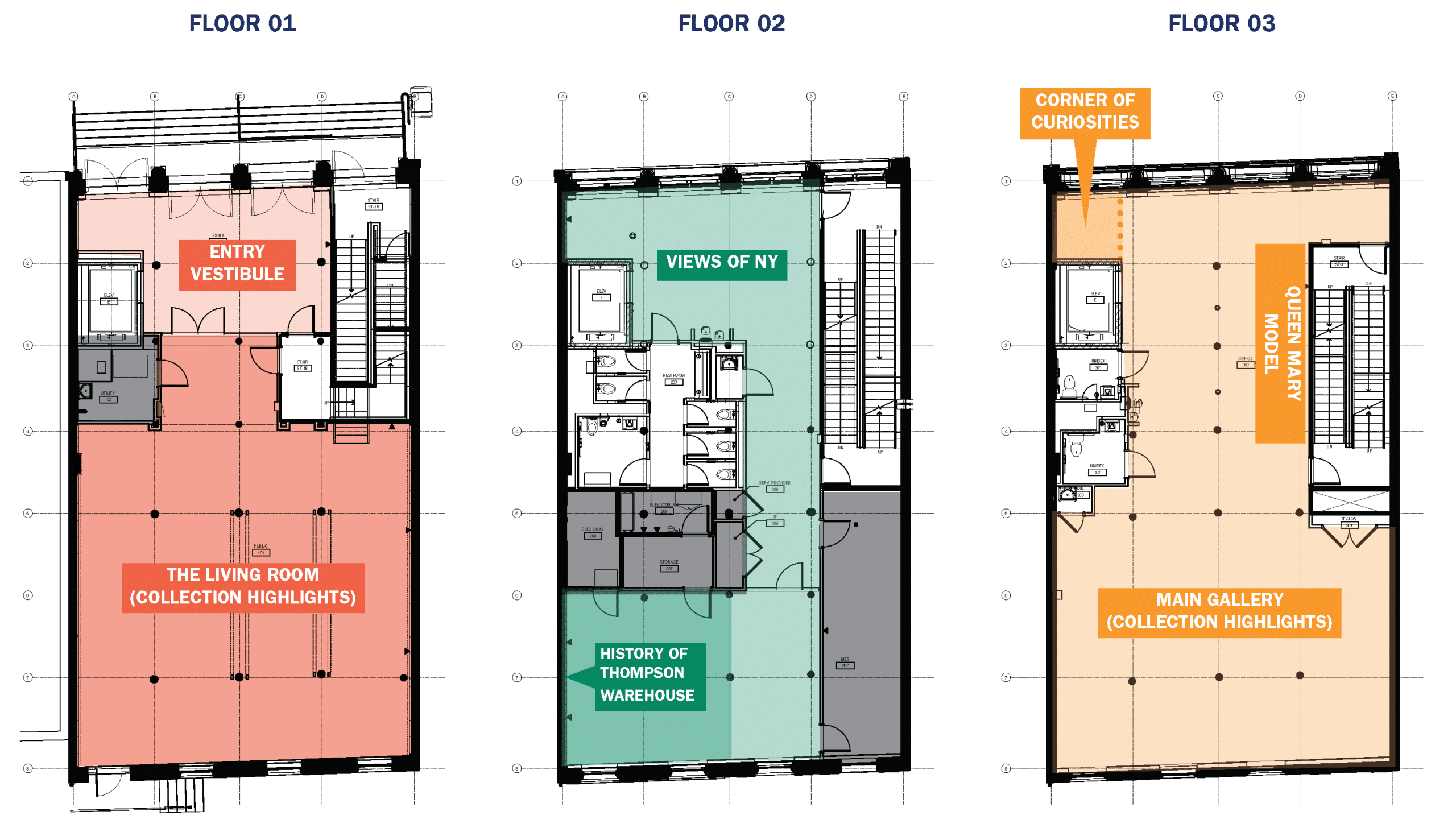
Specially-designed case for the "Queen Mary" for the exhibition.
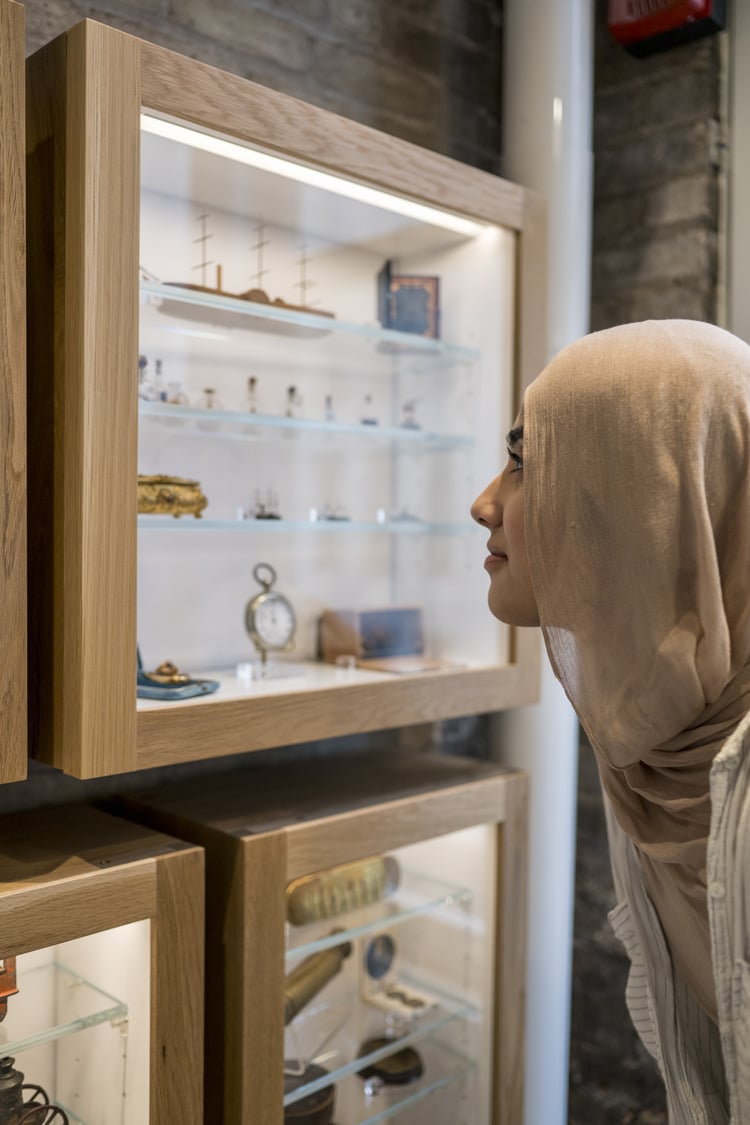
Uniquely small artifacts create a “Corner of Curiosities” inspired by the Renaissance European Cabinet of Curiosities.
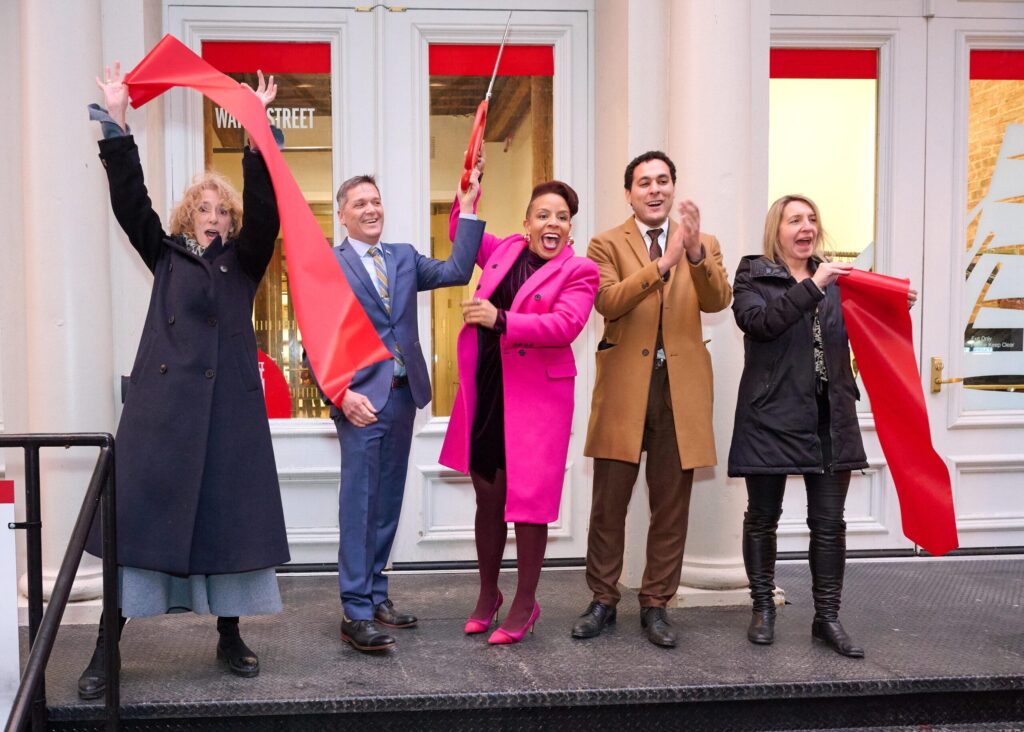
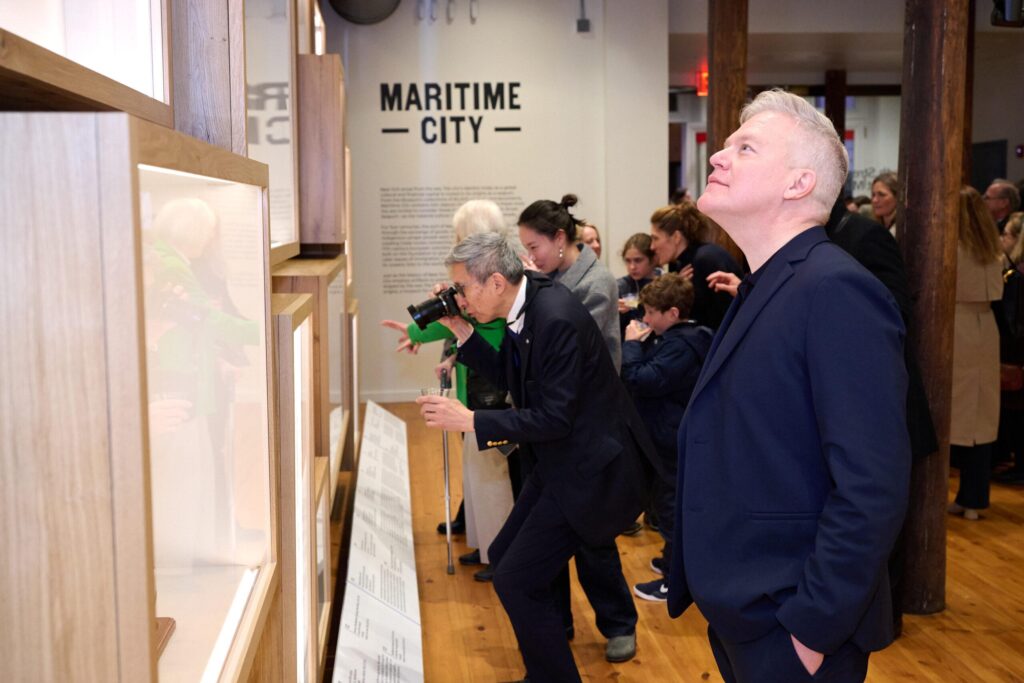
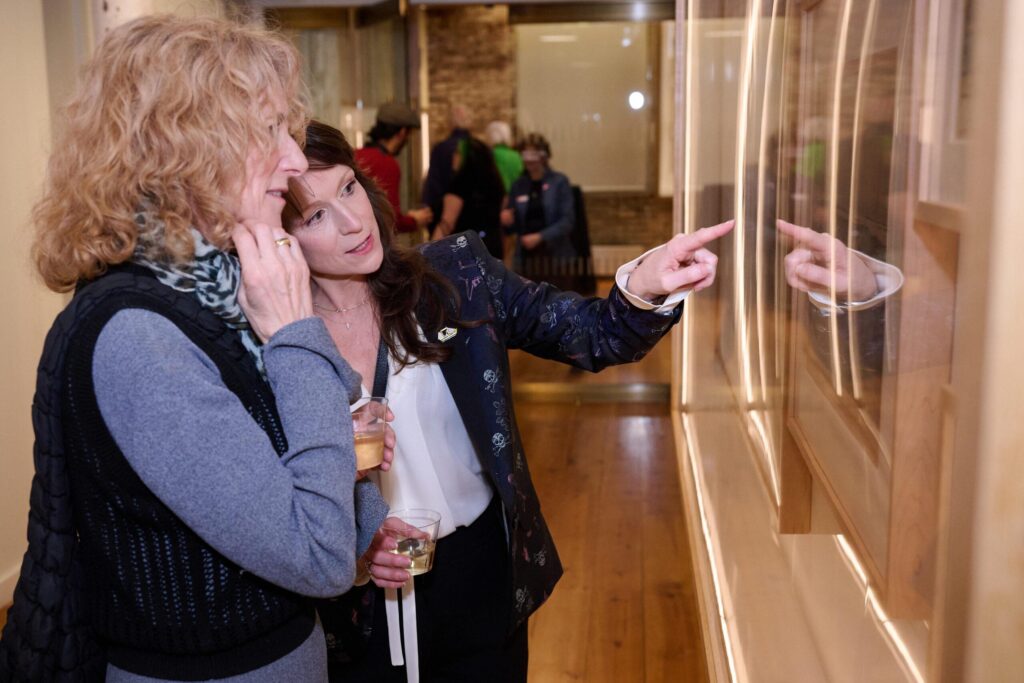
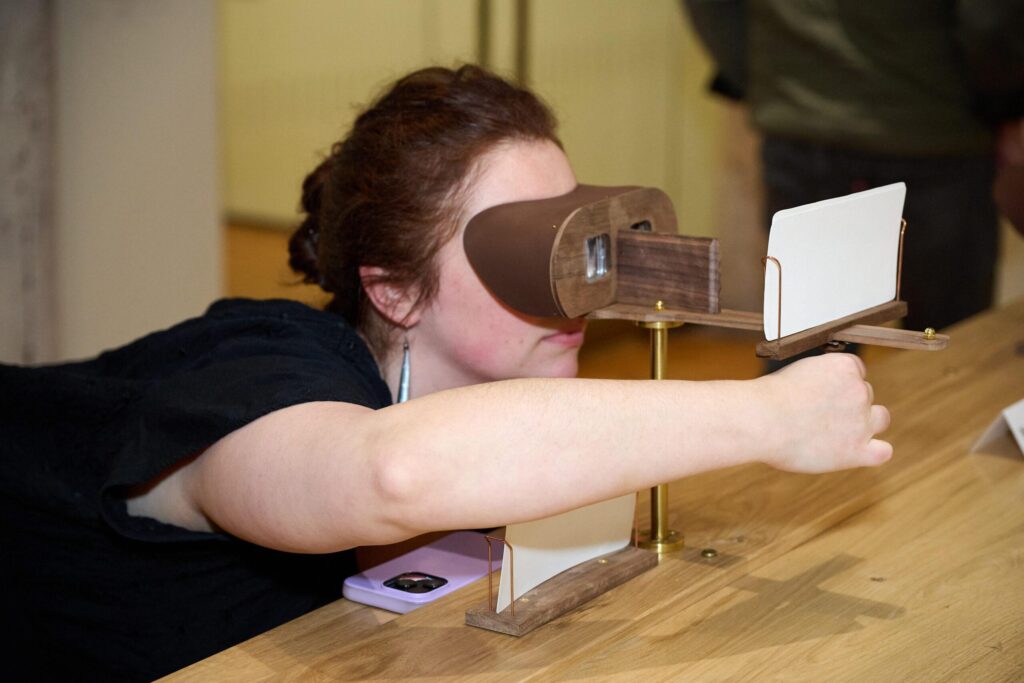
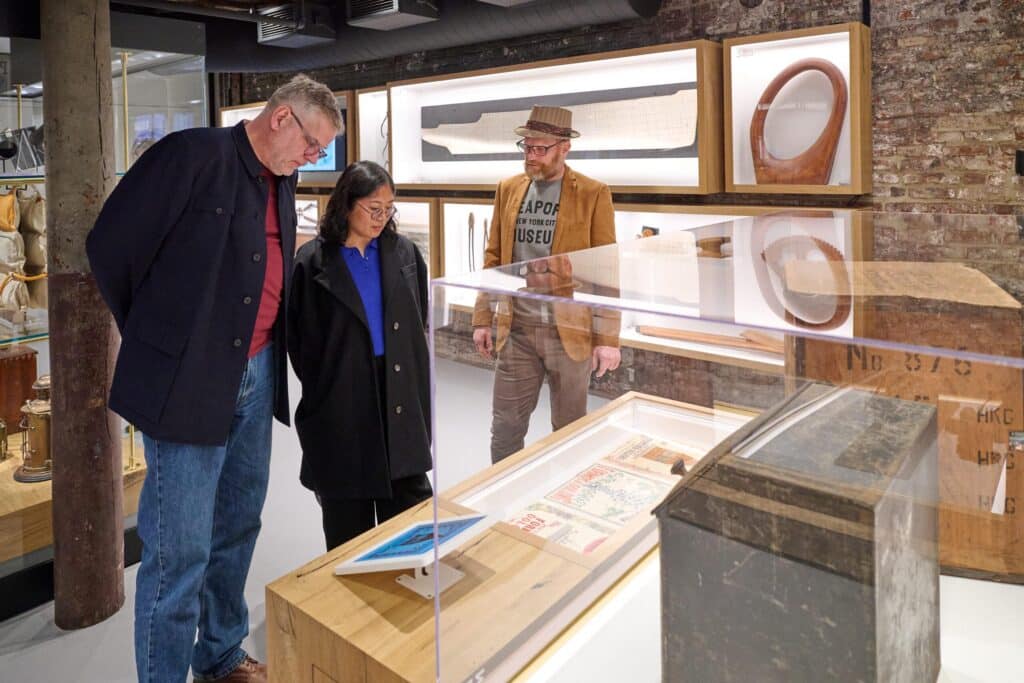
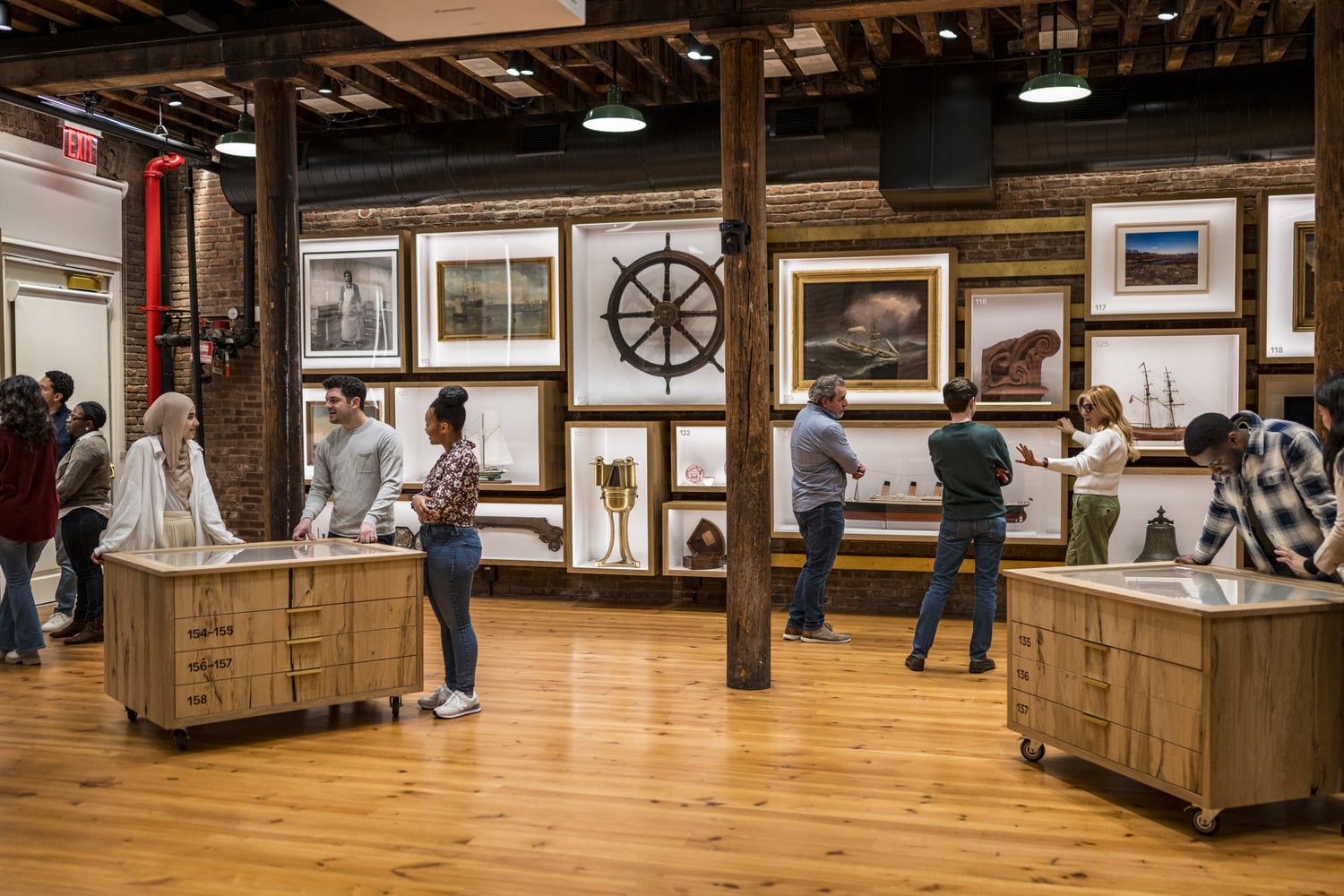
Interactive touchpoints, flat files, and media installations are woven throughout, inviting visitors to explore the layered stories of the Indigenous, immigrant, and working-class communities whose lives were shaped by the waterfront.
A display system built to carry four centuries of exchange, object by object
Marvel led the concept and design for Maritime City, the South Street Seaport Museum's inaugural permanent exhibition housed within the landmark 1868 A. A. Thomson & Co. Warehouse in Lower Manhattan. Spanning three floors, the exhibition presents over 540 artifacts drawn from the museum's collection of more than 80,000 objects, tracing how a port city became a global capital. Inspired by the neighborhood fabric of the South Street Seaport district, the building's architectural heritage, and historic shipping containers, a system of modular oak vitrines acts as framing devices that both house and unpack objects ranging from intimate trade fragments to a 22-foot model of the RMS Queen Mary. Interactive touchpoints, flat files, and media installations are woven throughout, inviting visitors to explore the layered stories of the Indigenous, immigrant, and working-class communities whose lives were shaped by the waterfront. Concealed behind the modular boxes, metal rail cleats anchored to the masonry walls give the museum the flexibility to evolve the exhibition over time, ensuring the design serves the institution as durably as the warehouse itself has. The result is an exhibition environment that feels deeply connected to the Seaport district, celebrating the city's maritime legacy through the objects, stories, and communities that shaped it.
This re-emergence from a decade in storage provides an opportunity to reposition the Museum’s collection alongside the history of industry, craft, and the movement of goods and people.
Placement of objects within a system of modular oak boxes, inside cabinets, on top of pallets, and within immersive videos provides multiple points of view and invites fresh perspectives.
“The design encourages visitors to connect to the textures, stories, and functions of artifacts to their respective containers—shipping crates, trunks, sea-going vessels, and warehouses—and affirms our fascination with unpacking—everything from internet merch to our ever-evolving relationship to history.”
Dennis Vermeulen, Partner at Marvel
Flat file drawers are utilized for viewers to uncover historical arts and crafts techniques, including technical drawings and ship plans, letterpress broadsides, lithographs, and wood engravings and discover the tools used to create these pieces.
"In collaboration with the Museum, our goal was to use design as a storytelling tool to craft the visitor experience across all three exhibition floors of this building. We wanted to create an exhibition that welcomes visitors from all backgrounds near and far and is accessible to all ages and mobility levels."
Justine Ala, Architectural Designer at Marvel
The ground floor has cases fixed to the walls and moveable furniture, which is ideal for quick spatial reconfiguration and allows for people to fill the space during special events.
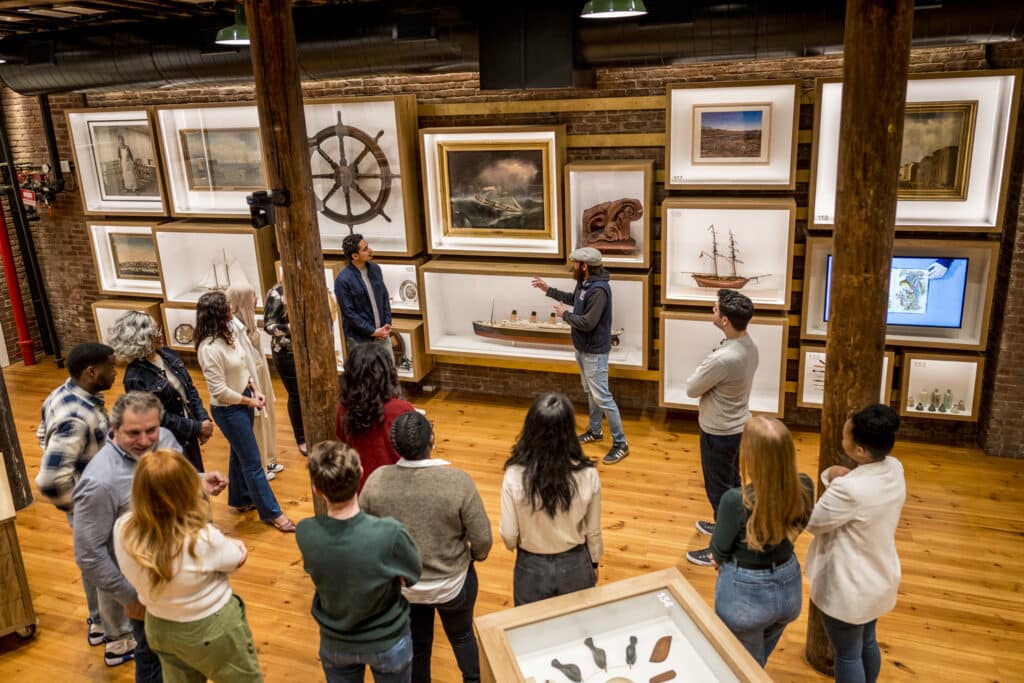
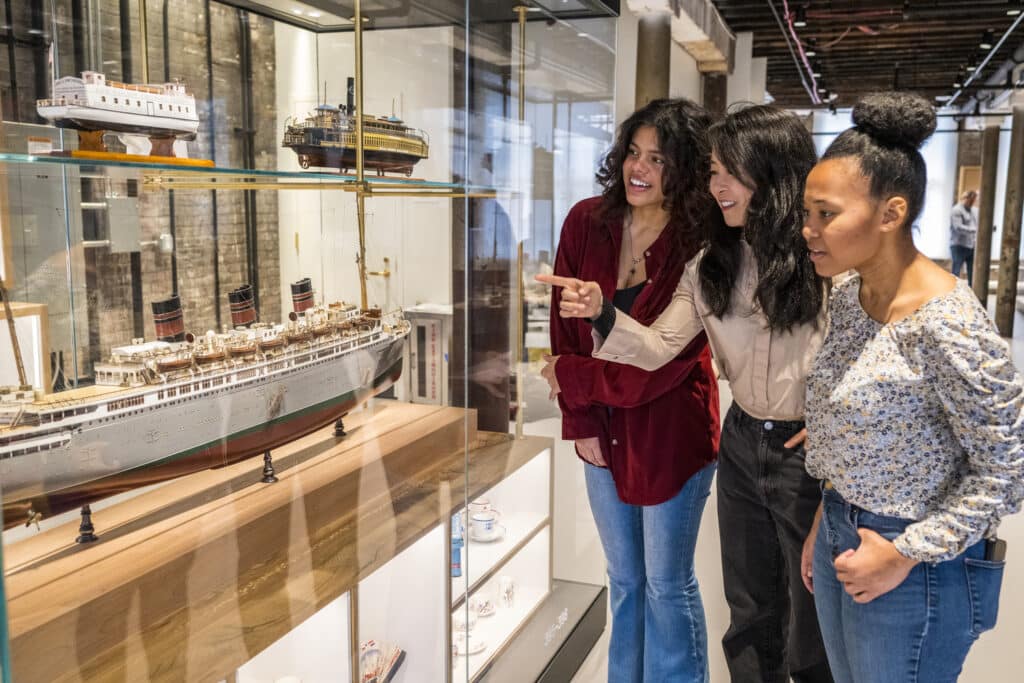
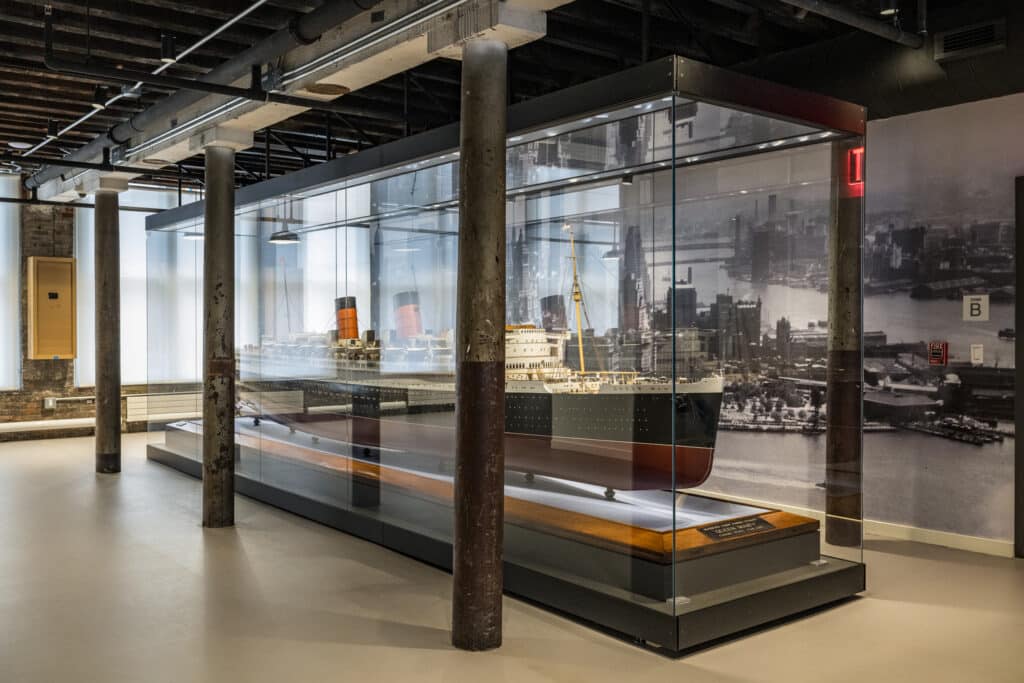
Interactive touchpoints, flat files, and media installations are woven throughout, inviting visitors to explore the layered stories of the Indigenous, immigrant, and working-class communities whose lives were shaped by the waterfront.


Maritime City Exhibit Design, South Street Seaport Museum
A display system built to carry four centuries of exchange, object by object
Marvel led the concept and design for Maritime City, the South Street Seaport Museum's inaugural permanent exhibition housed within the landmark 1868 A. A. Thomson & Co. Warehouse in Lower Manhattan. Spanning three floors, the exhibition presents over 540 artifacts drawn from the museum's collection of more than 80,000 objects, tracing how a port city became a global capital. Inspired by the neighborhood fabric of the South Street Seaport district, the building's architectural heritage, and historic shipping containers, a system of modular oak vitrines acts as framing devices that both house and unpack objects ranging from intimate trade fragments to a 22-foot model of the RMS Queen Mary. Concealed behind the modular boxes, metal rail cleats anchored to the masonry walls give the museum the flexibility to evolve the exhibition over time, ensuring the design serves the institution as durably as the warehouse itself has. The result is an exhibition environment that feels deeply connected to the Seaport district, celebrating the city's maritime legacy through the objects, stories, and communities that shaped it.
Placement of objects within a system of modular oak boxes, inside cabinets, on top of pallets, and within immersive videos provides multiple points of view and invites fresh perspectives.
“The design encourages visitors to connect to the textures, stories, and functions of artifacts to their respective containers—shipping crates, trunks, sea-going vessels, and warehouses—and affirms our fascination with unpacking—everything from internet merch to our ever-evolving relationship to history.”
Dennis Vermeulen, Partner at Marvel
Flat file drawers are utilized for viewers to uncover historical arts and crafts techniques, including technical drawings and ship plans, letterpress broadsides, lithographs, and wood engravings and discover the tools used to create these pieces.
This re-emergence from a decade in storage provides an opportunity to reposition the Museum’s collection alongside the history of industry, craft, and the movement of goods and people.
The 90-year-old, 22-foot long builder model of RMS Queen Mary has been restored and installed.
"In collaboration with the Museum, our goal was to use design as a storytelling tool to craft the visitor experience across all three exhibition floors of this building. We wanted to create an exhibition that welcomes visitors from all backgrounds near and far and is accessible to all ages and mobility levels."
Justine Ala, Architectural Designer at Marvel
The ground floor has cases fixed to the walls and moveable furniture, which is ideal for quick spatial reconfiguration and allows for people to fill the space during special events.
Specially-designed case for the "Queen Mary" for the exhibition.
Uniquely small artifacts create a “Corner of Curiosities” inspired by the Renaissance European Cabinet of Curiosities.
Interactive touchpoints, flat files, and media installations are woven throughout, inviting visitors to explore the layered stories of the Indigenous, immigrant, and working-class communities whose lives were shaped by the waterfront.
A display system built to carry four centuries of exchange, object by object
Marvel led the concept and design for Maritime City, the South Street Seaport Museum's inaugural permanent exhibition housed within the landmark 1868 A. A. Thomson & Co. Warehouse in Lower Manhattan. Spanning three floors, the exhibition presents over 540 artifacts drawn from the museum's collection of more than 80,000 objects, tracing how a port city became a global capital. Inspired by the neighborhood fabric of the South Street Seaport district, the building's architectural heritage, and historic shipping containers, a system of modular oak vitrines acts as framing devices that both house and unpack objects ranging from intimate trade fragments to a 22-foot model of the RMS Queen Mary. Interactive touchpoints, flat files, and media installations are woven throughout, inviting visitors to explore the layered stories of the Indigenous, immigrant, and working-class communities whose lives were shaped by the waterfront. Concealed behind the modular boxes, metal rail cleats anchored to the masonry walls give the museum the flexibility to evolve the exhibition over time, ensuring the design serves the institution as durably as the warehouse itself has. The result is an exhibition environment that feels deeply connected to the Seaport district, celebrating the city's maritime legacy through the objects, stories, and communities that shaped it.
This re-emergence from a decade in storage provides an opportunity to reposition the Museum’s collection alongside the history of industry, craft, and the movement of goods and people.
Placement of objects within a system of modular oak boxes, inside cabinets, on top of pallets, and within immersive videos provides multiple points of view and invites fresh perspectives.
“The design encourages visitors to connect to the textures, stories, and functions of artifacts to their respective containers—shipping crates, trunks, sea-going vessels, and warehouses—and affirms our fascination with unpacking—everything from internet merch to our ever-evolving relationship to history.”
Dennis Vermeulen, Partner at Marvel
Flat file drawers are utilized for viewers to uncover historical arts and crafts techniques, including technical drawings and ship plans, letterpress broadsides, lithographs, and wood engravings and discover the tools used to create these pieces.
"In collaboration with the Museum, our goal was to use design as a storytelling tool to craft the visitor experience across all three exhibition floors of this building. We wanted to create an exhibition that welcomes visitors from all backgrounds near and far and is accessible to all ages and mobility levels."
Justine Ala, Architectural Designer at Marvel
The ground floor has cases fixed to the walls and moveable furniture, which is ideal for quick spatial reconfiguration and allows for people to fill the space during special events.
Interactive touchpoints, flat files, and media installations are woven throughout, inviting visitors to explore the layered stories of the Indigenous, immigrant, and working-class communities whose lives were shaped by the waterfront.
Maritime City Exhibit Design, South Street Seaport Museum
A display system built to carry four centuries of exchange, object by object
Marvel led the concept and design for Maritime City, the South Street Seaport Museum's inaugural permanent exhibition housed within the landmark 1868 A. A. Thomson & Co. Warehouse in Lower Manhattan. Spanning three floors, the exhibition presents over 540 artifacts drawn from the museum's collection of more than 80,000 objects, tracing how a port city became a global capital. Inspired by the neighborhood fabric of the South Street Seaport district, the building's architectural heritage, and historic shipping containers, a system of modular oak vitrines acts as framing devices that both house and unpack objects ranging from intimate trade fragments to a 22-foot model of the RMS Queen Mary. Concealed behind the modular boxes, metal rail cleats anchored to the masonry walls give the museum the flexibility to evolve the exhibition over time, ensuring the design serves the institution as durably as the warehouse itself has. The result is an exhibition environment that feels deeply connected to the Seaport district, celebrating the city's maritime legacy through the objects, stories, and communities that shaped it.
Placement of objects within a system of modular oak boxes, inside cabinets, on top of pallets, and within immersive videos provides multiple points of view and invites fresh perspectives.
“The design encourages visitors to connect to the textures, stories, and functions of artifacts to their respective containers—shipping crates, trunks, sea-going vessels, and warehouses—and affirms our fascination with unpacking—everything from internet merch to our ever-evolving relationship to history.”
Dennis Vermeulen, Partner at Marvel
Flat file drawers are utilized for viewers to uncover historical arts and crafts techniques, including technical drawings and ship plans, letterpress broadsides, lithographs, and wood engravings and discover the tools used to create these pieces.
This re-emergence from a decade in storage provides an opportunity to reposition the Museum’s collection alongside the history of industry, craft, and the movement of goods and people.
The 90-year-old, 22-foot long builder model of RMS Queen Mary has been restored and installed.
"In collaboration with the Museum, our goal was to use design as a storytelling tool to craft the visitor experience across all three exhibition floors of this building. We wanted to create an exhibition that welcomes visitors from all backgrounds near and far and is accessible to all ages and mobility levels."
Justine Ala, Architectural Designer at Marvel
The ground floor has cases fixed to the walls and moveable furniture, which is ideal for quick spatial reconfiguration and allows for people to fill the space during special events.
Specially-designed case for the "Queen Mary" for the exhibition.
Uniquely small artifacts create a “Corner of Curiosities” inspired by the Renaissance European Cabinet of Curiosities.
Interactive touchpoints, flat files, and media installations are woven throughout, inviting visitors to explore the layered stories of the Indigenous, immigrant, and working-class communities whose lives were shaped by the waterfront.
A display system built to carry four centuries of exchange, object by object
Marvel led the concept and design for Maritime City, the South Street Seaport Museum's inaugural permanent exhibition housed within the landmark 1868 A. A. Thomson & Co. Warehouse in Lower Manhattan. Spanning three floors, the exhibition presents over 540 artifacts drawn from the museum's collection of more than 80,000 objects, tracing how a port city became a global capital. Inspired by the neighborhood fabric of the South Street Seaport district, the building's architectural heritage, and historic shipping containers, a system of modular oak vitrines acts as framing devices that both house and unpack objects ranging from intimate trade fragments to a 22-foot model of the RMS Queen Mary. Interactive touchpoints, flat files, and media installations are woven throughout, inviting visitors to explore the layered stories of the Indigenous, immigrant, and working-class communities whose lives were shaped by the waterfront. Concealed behind the modular boxes, metal rail cleats anchored to the masonry walls give the museum the flexibility to evolve the exhibition over time, ensuring the design serves the institution as durably as the warehouse itself has. The result is an exhibition environment that feels deeply connected to the Seaport district, celebrating the city's maritime legacy through the objects, stories, and communities that shaped it.
This re-emergence from a decade in storage provides an opportunity to reposition the Museum’s collection alongside the history of industry, craft, and the movement of goods and people.
Placement of objects within a system of modular oak boxes, inside cabinets, on top of pallets, and within immersive videos provides multiple points of view and invites fresh perspectives.
“The design encourages visitors to connect to the textures, stories, and functions of artifacts to their respective containers—shipping crates, trunks, sea-going vessels, and warehouses—and affirms our fascination with unpacking—everything from internet merch to our ever-evolving relationship to history.”
Dennis Vermeulen, Partner at Marvel
Flat file drawers are utilized for viewers to uncover historical arts and crafts techniques, including technical drawings and ship plans, letterpress broadsides, lithographs, and wood engravings and discover the tools used to create these pieces.
"In collaboration with the Museum, our goal was to use design as a storytelling tool to craft the visitor experience across all three exhibition floors of this building. We wanted to create an exhibition that welcomes visitors from all backgrounds near and far and is accessible to all ages and mobility levels."
Justine Ala, Architectural Designer at Marvel
The ground floor has cases fixed to the walls and moveable furniture, which is ideal for quick spatial reconfiguration and allows for people to fill the space during special events.
Interactive touchpoints, flat files, and media installations are woven throughout, inviting visitors to explore the layered stories of the Indigenous, immigrant, and working-class communities whose lives were shaped by the waterfront.